CS
Portfolio Case Study

Limited-Time Discount System

Situation

Atoms - Paid Conversion Growth Design

Background

Atoms is an AI product-building platform that helps users turn ideas into launch-ready products, validate concepts quickly, and move from creation to customer-facing output without coding.

Project Task

In this project, I led the limited-time discount design across the first-preview modal, in-product banner, pricing flow, and homepage exposure, turning a rough monetization tactic into a more coherent paid-conversion system.

Impact

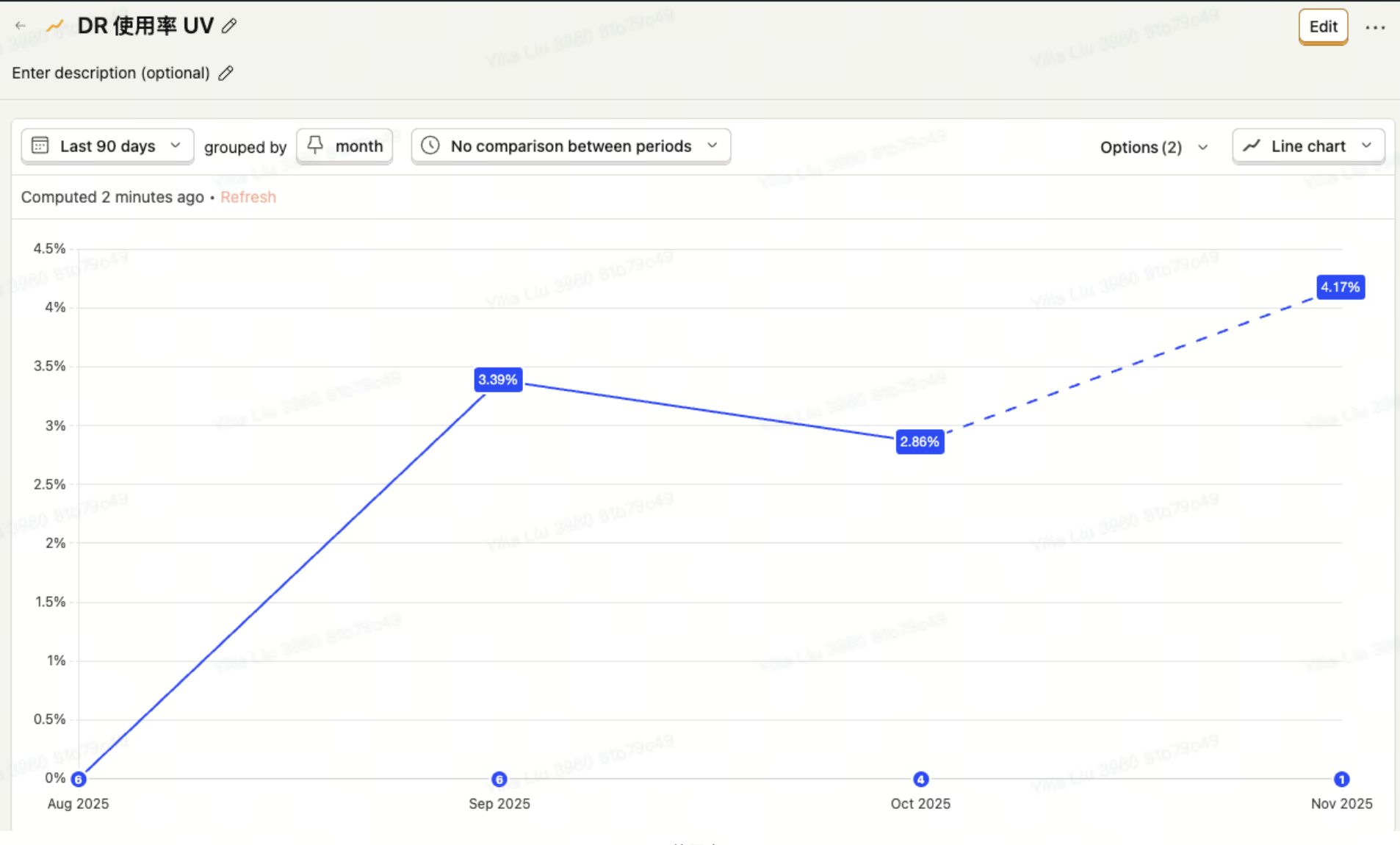
This project turned a rough discount tactic into a more scalable conversion system, helping Atoms raise discount conversion from 2.3% to 4.17% while creating a clearer path from first product value to payment and aligning business urgency with a more premium product experience.
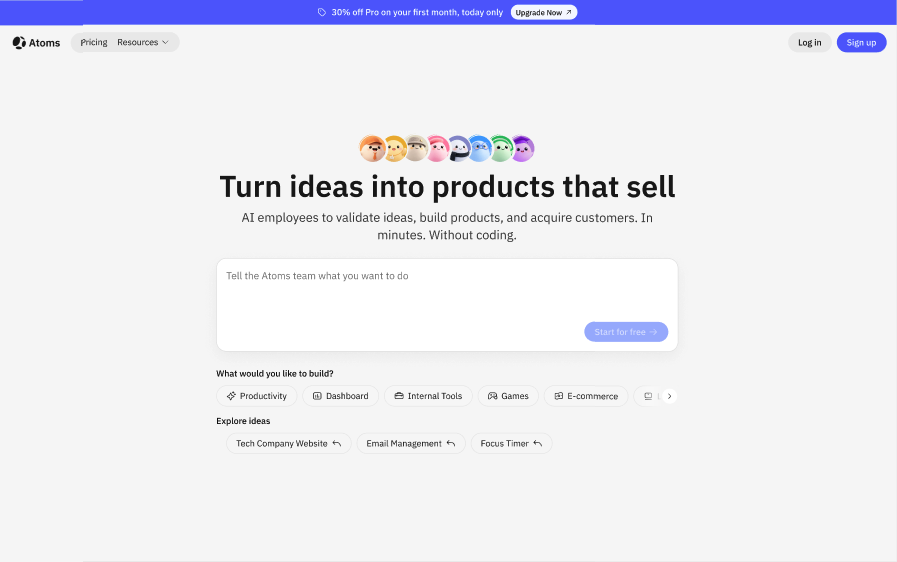
Homepage banner for the limited-time discount system
The homepage banner became the top-level anchor for the system. It let the offer stay visible across navigation instead of disappearing after one modal. Hero Surface
Role Lead Product Designer
Scope Monetization UX, system design, stakeholder alignment
Timeline Rapid concept-to-ship decision cycle
Team PM, founder, UI design, data, SEO, engineering
Overview

A growth tactic turned into a real product system.

The business already had evidence that discounts could improve conversion, but the experience was fragmented and visually rough. I repositioned the work from “design a discount modal” to “design a coherent monetization journey” so the offer could feel trustworthy, timely, and reusable across the product.

What the project needed

The team needed a cleaner way to activate free users and high-intent non-paying users after they experienced real value. The previous logic proved the tactic, but not the product quality. The new version had to work across modal, chat, pricing, and navigation surfaces as one connected system.

My design goal

Build a premium-feeling upgrade path that appears at the right emotional moment, stays visible long enough to matter, and carries the same message all the way to checkout without creating a pushy or low-end impression.

30% Discount value used in the launch window
24h Offer duration to create urgency
4 Key product surfaces connected together
1 Unified story from value to payment
The Problem

The data did not say “invent a discount.” It showed a conversion gap after value was already proven.

The chart alone shows that discount-related mechanics had traction before, but it does not explain the full product problem by itself. The deeper issue was that Atoms users could already reach a meaningful success moment, yet the path from that first value to payment was still too weak, too delayed, and too easy to abandon.

Why this became a product problem

  • Users could experience clear value in the product, but the existing upgrade path did not respond strongly enough at that moment.
  • Historical DR data suggested that price incentives could unlock conversion, but those wins were still fragmented tactics rather than a designed system.
  • By the time users reached pricing, the emotional momentum from first success had often faded, so intent was lost before payment.

Why limited-time discount was the right intervention

The opportunity was not to force a discount into the product, but to turn an already-validated monetization signal into a more intentional conversion system. In other words, we were solving for timing, continuity, and trust: how to place a time-sensitive offer at the point of highest intent, keep it visible long enough to matter, and still make it feel premium inside an AI product.

Historical chart showing prior discount validation in earlier product work
This appendix chart supports one part of the story: discount-related mechanics were already showing meaningful conversion potential. What it does not show on its own is the experience gap between first product success and checkout, which is why the project needed product design, not just a pricing tweak.
Solutions

I designed a three-part conversion flow: trigger, nudge, and continuity.

The final direction treated each surface as a different layer of persuasion. The modal captured peak emotion, the in-product banner preserved memory, and the pricing surfaces reduced the gap between user intent and purchase.

Rather than repeating the same CTA everywhere, I gave each touch point one job. This kept the system readable and reduced the feeling of spam, while still making the offer persistent enough to matter commercially.

Design Principle

High recall, low interruption, and one consistent offer language across the entire journey.

Step 01

Trigger the offer at the first success moment

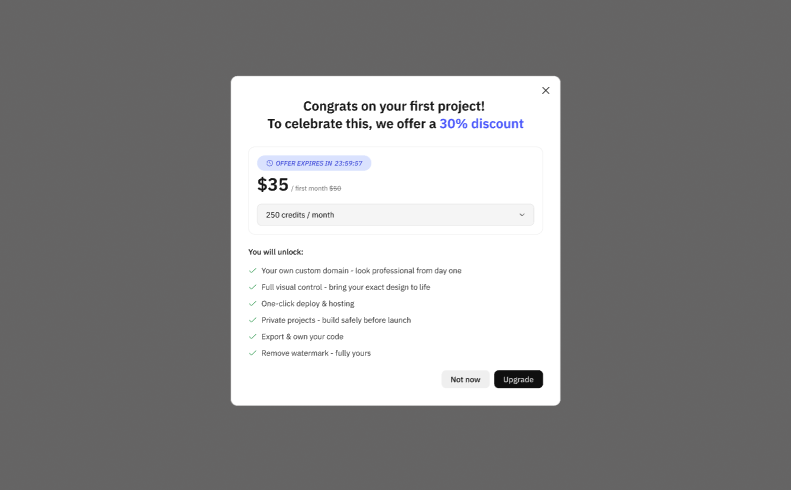
The modal appears when the user sees their first meaningful preview. This is the highest emotional point in the workflow, so the offer feels tied to value instead of randomly interrupting the session.

I framed the modal as a celebration first and a pricing push second. That subtle hierarchy helped the experience feel more like momentum and less like an ad.

Discount modal shown after the first successful preview
Celebration + offer + capability unlocks in one focused moment.
Step 02

Keep urgency visible inside the workflow

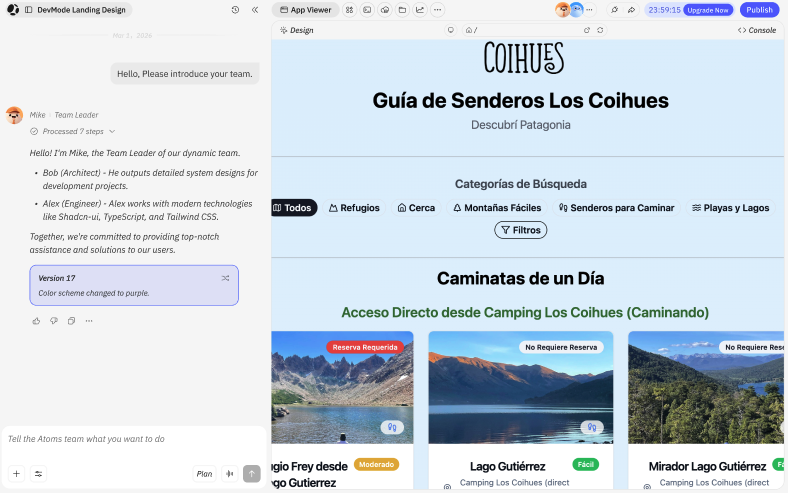
After the first interruption, the message becomes lighter weight. A countdown banner inside chat preserves urgency without forcing users to decide immediately.

This turned the offer into a background memory aid rather than a repeated hard stop, which was especially important for maintaining product flow.

Chat product surface with persistent countdown banner
The user can keep building while the offer stays softly present.
Step 03

Carry the same story into checkout surfaces

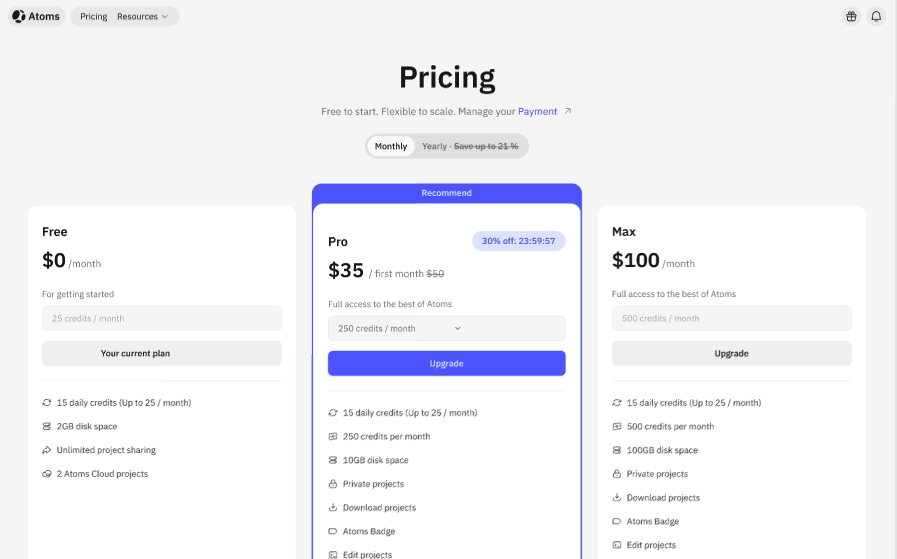
Pricing and top-level navigation surfaces reuse the same offer language and time cues so users do not lose context when moving toward payment.

This continuity closes the gap between intent and conversion. Instead of starting over on the pricing page, the user sees the same proposition carried forward.

Pricing page continuing the same time-limited offer
One consistent discount narrative from product use to payment.
Impact

The strongest outcome was clarity: for users and for the team.

This project demonstrates product thinking beyond isolated screens. The work turned a rough commercial tactic into a reusable system, and it gave stakeholders a clearer way to judge trade-offs between conversion pressure, brand fit, and implementation speed.

System Thinking

Connected touch points outperform isolated UI

The real leverage came from linking modal, chat, banner, and pricing surfaces into one coherent conversion story.

Brand Balance

Urgency works better when it still feels premium

The final direction kept enough contrast to drive attention without drifting into a cheap or overly aggressive sales pattern.

Decision Design

Design leadership shaped the review process too

The project was also about helping the team evaluate options in a structured way when data was incomplete and opinions were strong.

CS

Private Case Study

Enter the password to view this portfolio page.